

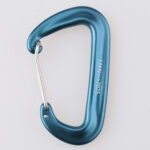
Theme: JY-2518 Carabiner – The Modern Everyday Gift for Discerning Shoppers
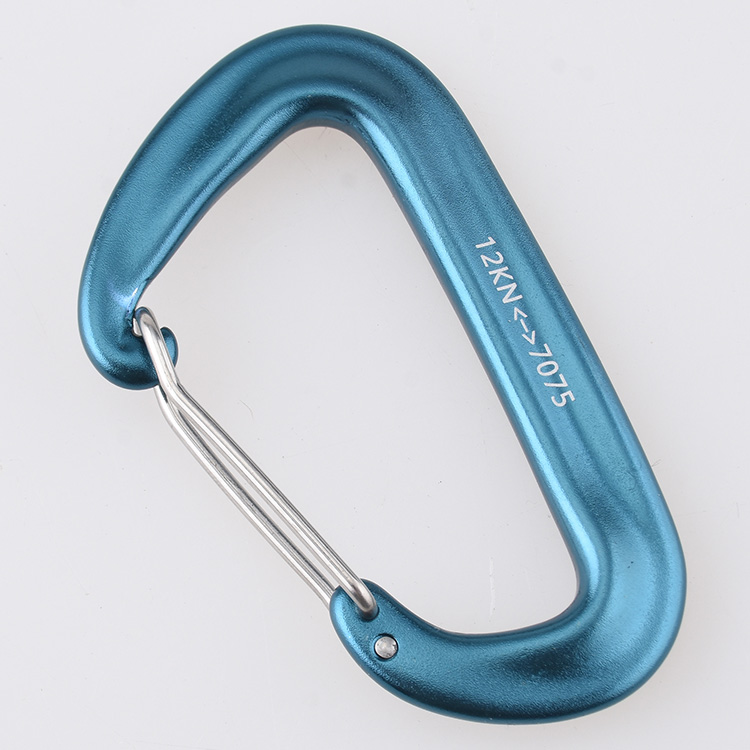
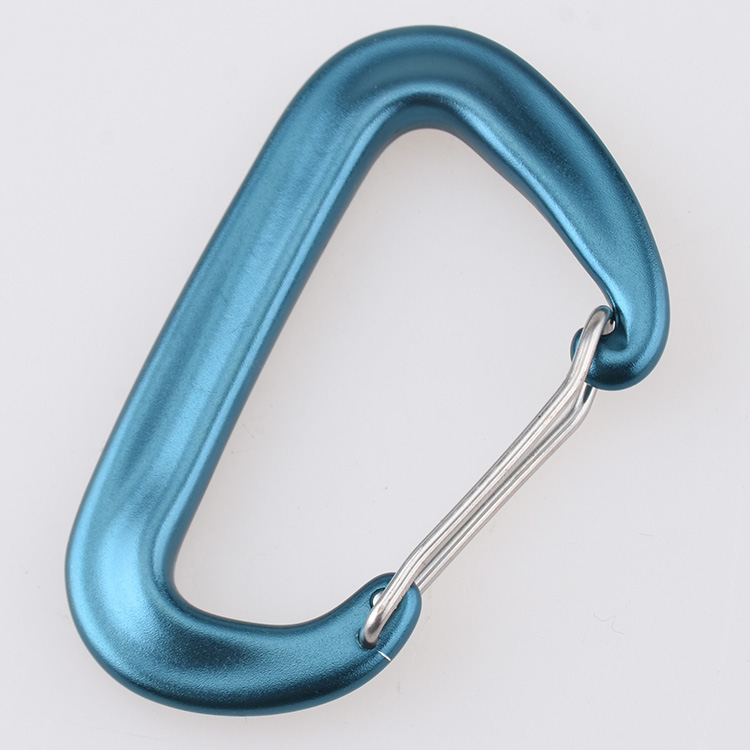
Imagine a daily essential that’s as practical as it is stylish—a compact tool that fits into anyone’s routine, making life easier, safer, and a bit more organized. The JY-2518 Carabiner from Shieldon Manufacturing & Trading Combo is designed with this very purpose in mind. Perfect for Aldi Nord, Aldi Süd, REWE, Ihr Kaufpark, Center To Go, and similar retailers, this marine blue beauty is ready to become your go-to gift and impulse item for today’s on-the-go shoppers.
The JY-2518 is crafted from robust aluminum, available in either A6061 or the higher-strength A7075 alloy. This gives your store the flexibility to offer a product line that suits both everyday use and more demanding needs—while keeping the footprint small and featherlight at just 0.78 oz (22g).
Its closed length of 3.15” (80mm), thickness of 0.51” (13mm), and height of 1.85” (47mm) hit the sweet spot between pocket-friendly and substantial enough to handle daily tasks. The anodized marine blue finish doesn’t just look sharp; it also provides a tough, scratch-resistant shell that stands up to the bumps and scrapes of modern life.
The beauty of the JY-2518 lies in its adaptability. Customers can use it to secure keys, attach water bottles to backpacks, hang shopping bags, or tether gear for travel or outdoor activities. Its smooth spring gate opens easily yet closes securely, giving peace of mind whether at work, at play, or in transit.
As a gift, it’s universal—suitable for men and women, students and professionals, urbanites and adventurers. Its marine blue hue is both modern and unisex, easily attracting a broad customer base.
The JY-2518 isn’t just another carabiner—it’s a retail success story waiting to happen. With a regular minimum order quantity (MOQ) of just 300 units, it’s accessible for both large campaigns and trial runs. Shieldon’s streamlined OEM/ODM service means your branding, promotional artwork, or private label can be added with ease, ensuring your store stands out in the crowded daily carry gift market.
Bulk packaging and eye-catching display options make the JY-2518 ideal for point-of-sale placement, seasonal gift sets, or customer loyalty promotions. Its compact size and affordable price point encourage impulse purchases, helping drive up the average basket size.
The JY-2518 carabiner isn’t just a clip—it’s a daily companion, a thoughtful gift, and a statement of modern convenience. Stock it at your store, and you’ll be offering customers a solution for everyday organization—one that’s as reliable as it is attractive. Make the JY-2518 part of your next promotion or seasonal campaign, and let Shieldon help you deliver products that shoppers will reach for, use, and appreciate—every single day.
Theme: The History and Origin of Carabiners
Carabiners are now a staple item for climbers, campers, and anyone who wants to keep keys or gear organized. But the journey of this humble clip spans centuries, cultures, and creative leaps in design.
The word “carabiner” is derived from the German “Karabinerhaken,” which translates to “hook for a carbine.” In the 19th century, carabiners were first developed as spring-loaded metal hooks for German soldiers. These clips allowed troops to quickly and securely attach their carbines (lightweight rifles) to belts and bandoliers. The ease of one-handed operation made carabiners invaluable in fast-paced, tactical situations.
Soon after, the design caught the attention of firefighters. Their work demanded quick, secure connections for ropes and ladders in high-risk scenarios. The carabiner’s mechanical simplicity and reliability made it ideal for these life-saving tasks.
As mountaineering and rock climbing gained popularity in the early 20th century, the utility of carabiners became obvious to adventurers and alpinists. Early climbers improvised with available hooks and snaps, but soon, specialized carabiners were developed for outdoor use. These versions were lighter and stronger, often crafted from steel for reliability.
By the 1930s, climbers in Europe, especially in the Alps, began using carabiners for belaying (holding the rope for a climber), rappelling, and making quick connections with protection gear like pitons. Carabiners became a symbol of climbing safety and technical innovation.
Steel remained the standard until the mid-20th century, when advances in metallurgy introduced aluminum alloys. Lightweight aluminum carabiners revolutionized climbing by reducing the burden on climbers’ racks, allowing for longer and more ambitious ascents. The introduction of locking gates—where the gate can be screwed or twisted to prevent accidental opening—further increased safety.
Modern carabiners come in a variety of shapes, sizes, and locking mechanisms, each designed to meet the needs of climbers, cavers, rescue teams, and even industrial workers.
Carabiners have long since outgrown their mountaineering roots. Today, they are found everywhere: on keychains, backpacks, pet leashes, and as organizational tools in homes and offices. Their reliability and convenience have made them a favorite in countless settings.
The carabiner’s design has endured because it solves a universal need—to connect and disconnect quickly, securely, and with one hand. From the battlefields of Europe to the world’s highest peaks, and now to everyday life, the carabiner is a testament to practical innovation. Its story continues, evolving with new materials and uses, but always rooted in the simple idea of making the essential connection—easier, safer, and faster.


 IT
IT  EN
EN  ES
ES  FR
FR  RU
RU  PT
PT  KO
KO  ID
ID  MS
MS  DE
DE  TL
TL